Thursday, 1 October 2015

Recogiendo las piezas del puzle centroaficano

Desde el sábado hay 40.000 nuevos desplazados en Bangui, 800 presos se han fugado de la única prisión que funcionaba en la capital, hay cientos de heridos y más de una treintena de personas han muerto. El hermano de una de esas víctimas sigue trabajando conmigo en el hospital. Cuando me entero le digo que puede irse a casa, me lo agradece con una mirada resignada, digna y triste. Pero no se va.

Hoy la cantidad de twits sobre #CARcrisis ha descendido un poco y casi todos hablan de una calma tensa. En la sala de la tele las piezas de un puzle gigantesco van encontrando su sitio gracias a la infinita paciencia de Angela Yo me acabo de terminar el libro "Making sense of the Central African Republic" algo así como "Intentando entender la República Centroafricana". A ver si lo he conseguido.

Un poco de historia

Lo primero que aprendo es que desde el siglo XIX ha estado muy influida por lo que hoy es Chad, con su sultanato esclavista haciendo de las suyas por aquí. Poco sorprende que en la historia reciente el Chad haya considerado que podía poner y quitar presidentes a su antojo, como bien sabe Bozizé. Aupado al poder por el Déby, el eterno presidente de Chad, pero que luego fue derrocado por milicias Seleka integradas en parte por mercenarios chadianos y sustituido por Michel Djotodia.

Déby, presidente de Chad desde 1990
Bozizé, presidente de RCA de 2003 a 2013
Djotodia, presidente de RCA de marzo de 2013 a enero 2014

Lo segundo es que para los franceses, lo que ellos llamaron Oubangui-Chari nació como un accidente de la historia colonial. Me explico. Los franceses querían controlar África desde Senegal hasta Djibouti, de Oeste a Este, y así frenar la ambición paralela de los ingleses de controlar África "from Cape to Cairo", desde Ciudad el Cabo hasta el Cairo.

Por no alargar demasiado la historia: los franceses, después de llegar hasta Fashoda con una expedición aventurera compuesta de miles de porteadores pero sólo 150 soldados, cuando se encontraron con los ingleses se dieron media vuelta sin que éstos tuvieran que disparar una sola bala (superioridad naval británica, caso Dreyfus en Francia...). Al menos los ingleses tuvieron el detalle de cambiar el nombre a la ciudad para que no les escociera tanto la herida a los franceses. Ahora Fashoda se llama Kodok, y está en Sudán del Sur.

Pero volvamos a RCA. El caso es que los franceses se replegaron aquí y pasó a ser el callejón sin salida de su soñado eje Oeste-Este. Y parece que sigue siéndolo :-(

Con estos orígenes y el ejemplo del vecino Congo belga sorprende menos la desfachatez del gobierno francés de entregar la región a un grupo de empresas sin escrúpulos a cambio de un 15 por ciento de los beneficios que obtuvieran. Y sorprende menos aún la explotación salvaje que en ausencia de un autoridad central fuerte, cada grupo ha hecho de los recursos que tenía a mano; como la madera, las reservas naturales con sus furtivos y los grupos armados antifurtivos (donde se han "formado" parte de los rebeldes del país como el jefe Seleka Joseph Zindeko) o los llamados diamantes de sangre.

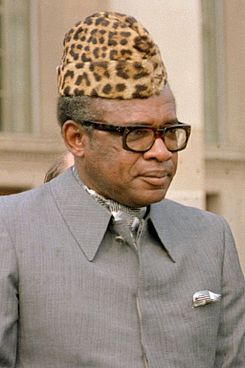
Parece fácil. Un clásico. Sin embargo, para poder pasar a otras piezas del puzle centroafricano tenemos que saber bien cómo colocar la de República Democrática del Congo. Antes de que toda la atención se dirigiese al norte, a Chad al otro lado del río Chari, el vecino natural era el del Sur, el de la otra orilla del río Oubangui que baña la capital. No dejaba lugar a dudas Mobutu, el exdictador de Congo cuando decía que Bokassa (auto proclamado emperador de RCA) era su hermano pero que Kolingba (de su misma etnia, Yakoma) era su hijo.

Mobutu, presidente de Zaire (RDC) de 1965 a 1997
"Emperador" Bokassa, presidente de RCA de 1966 a 1976
Kolingba, presidente de RCA de 1981 a 2003
(aunque las malas lenguas dicen que quien de verdad gobernaba era Mantion, el "pro cónsul" de Francia)

La "familia congolesa" se rompe cuando Patassé, el único presidente de la RCA electo democráticamente, se asocia con Bemba, dirigente del MLC y enfrentado al presidente Kabila. Claro que a Patassé, el más carismático y según dicen juerguista de los últimos presidentes le gustaba arriesgar con sus amistades, como con Gadaffi para frenar la influencia del chadiano Déby. Como decíamos antes, le sale mal la jugada y Déby ayuda a Bozizé a conseguir la presidencia.

Patassé, único presidente electo de RCA. Gobernó de 1993 a 2003
Al pillaje de Francia, que nunca se fue, las presiones de Congo primero y de Chad después, el efecto rebote de otros conflictos como el de Darfur y la presencia de grupos armados como la Lord Resistance Army del ugandés Joseph Kony, a los conflictos de los agricultores locales con los pastores Peul, etc  hay que añadir una pieza que parece que no encaja ni con cola: casi una docena de "misiones de paz" internacionales que se han paseado por aquí desde los noventa hasta la MINUSCA actual (con la Sangaris francesa siempre cerca).

¿Cómo es posible que tantos organismos, durante tanto tiempo, hayan conseguido tan poco?

En el libro de Tatiana Carayannis y Louisa Lombard se habla del "acordeón de la ayuda" que llega en grandes cantidades cuando la situación ya es desastrosa pero desaparece antes de que empiecen siquiera a resolverse los problemas de fondo: seguridad, un desarrollo económico que llegue a la población, unas instituciones no corruptas y estables... Los 400 millones de ayuda humanitaria de emergencia que se emplearon en 2014 son tres o cuatro veces más que la ayuda destinada al desarrollo. En su lugar tenemos el círculo vicioso de unos actores internacionales que quieren irse cuanto antes y unas élites locales que no quieren renunciar a sus privilegios en un país más grande que Francia pero con una población de poco más de cuatro millones de habitantes viviendo en la pobreza con una esperanza de vida de tan solo 47 años.

Quizá el ejemplo más claro sean los 27 millones de dólares del fondo para el programa de Desarmamento Desmobilización y Reintegración que como es obvio estos días no ha servido para que los grupos se desarmen sino que parece que para lo contrario. El enlentecimiento del proceso por parte de las élites para seguir recibiendo dinero junto a la resignación de los donantes ha permitido que mucha gente se alistara en los grupos armados con la promesa del dinero que en el futuro recibirían de los programas de DDR.

Con todas estas piezas del puzle ya se empieza a entender mejor la violencia desatada a finales de 2012 y durante el 2013 por la "alianza" de grupos Seleka del norte olvidado de CAR, de mayoría musulmana (algunos expolicías antifurtivos y otros mercenarios chadianos) que derrocó al corrupto presidente Bozizé y a su familia instalada en el poder. O la reacción Anti Balaka de mayoría cristiana que respondió con más brutalidad si cabe y que hace caer en un año al presidente Djotodia.

Sin embargo faltan las mismas piezas de siempre para que el puzle centroafricano no salte por los aires una y otra vez cada vez que alguien de un puñetazo en la mesa regional. ¿Aprenderá la comunidad internacional y la MINUSCA de sus errores pasados? ¿Cómo influirá en el proceso la posibilidad de vender los diamantes de sangre? ¿Será capaz la presidenta de transición Catherine Samba-Panza de encontrar las piezas de paz, estabilidad y fiabilidad institucional que el país necesita antes de que se celebren unas elecciones que puedan llamarse democráticas?

Parece poco probable cuando ella misma estuvo envuelta en un caso de corrupción relacionado con la concesión de explotación de diamantes a la hija del presidente de Angola, que donaba 10 millones de ayuda al desarrollo y 5 más que desaparecieron por el camino. O cada vez que un mediador como el presidente de Congo Brazaville, Sassou Nguesso, mira más por el apoyo de Francia para su tercer mandato que por la resolución de los problemas de la población.

Catherine Samba-Panza, presidenta de transición de RCA desde 2014

Pero cuando recorro día tras día la misma carretera de tierra que se transforma en río con cada tormenta y que sin embargo todas las mañanas vuelve a ser un camino donde te saludan por tu nombre niños y mayores de sonrisa y esperanza infatigables, entiendo que hay piezas que no están en el libro que me acabo de leer. Me parece que empiezo a vislumbrar un trozito de este maravilloso puzle.


Y cada vez que miro a mi compañero que sigue cuidando enfermos pese a que acaban de matar a su hermano, no me cabe duda de que cuando todos aportemos nuestro granito de arena para que encajen por fin todas las piezas, los centroafricanos podrán disfrutar por fin de su pequeño paraíso entre los ríos Ubangui y Chari.


Sunday, 12 July 2015

Good bye letter to the great MSF team in Malakal

Juba 06/7/2015

Dear friends from South Soudan:

I have not left Juba yet and I already miss you all.
I want to thank you first for all the things I have learnt with you and for all the wonderful stories that you have told me. I have seen the temple of Nyikang, the Shilluk king that never dies, close to the tree where people go to proof their innocence because if they lie they die.

I have heard that Dinka and Nuer ancestors come from the first humans on earth and that they quarrelled because one took the young calf meant to be for the other. But you have taught me how all the tribes, kawayas included, can work together as a big family.

I want to thank the most smiling cleaners in MSF records for the miracle of having an impeccable hospital in the middle of the mud. And for sharing their morning tea with me ;-) To the log team for big things as building and keeping the hospital in perfect conditions but also for small things like postponing their duties to look for a piece of soap for a mother who need it. To the cookers that bring happiness to the stomach but also to the ears when they are singing or to the eyes when we see their children playing around. Also to the drivers that offer to go to anyplace even if it can be dangerous for them.

And what to say about the amazing medical team we have. The imagination and patience of the nutritional assistants to find new ways to make our little babies accept the food and grow healthier. Or the divination power of our nurses and nurse supervisors to decipher my handwriting to know what is the treatment I want for the patients ;-) Thank you for the tender care you give them and also to keep them alive. You are the ones keeping permanently your eyes on them so we all can run to help when something goes wrong. If you didn´t pay attention to them, we always would arrive too late.

Special thanks to the unquenchable enthusiasm and energy of our CHWs that are our feet, eyes, ears and mouths outside the hospital. They can go tent by tent saving lives by explaining people how to prevent diseases or looking for a sick kid or an abducted woman or a man that didn´t come for the treatment. Without you we just treat the people that come to us, with you our hands can reach the farthest tent of this POC. You know how proud I am of all of you.
Forgive me because I cannot name you one by one but I will make a few exceptions:

Thank you Daniel for being the first one suffering me, for making a perfect follow up of the TB patients and for improving so much. If the new clinical officers and we all make the same effort you do, we will become an even better hospital and project.

Gentle, a soldier that becomes a clinical officer is a metaphor of the future I wish for this country even if you had a different name ;-) Thank you and all the rest for assuming the responsibility when we needed you even with the music of war being played so close to us.

Simon Dau, I know people in the new extension are happy having you there, but we need your big heart back in the hospital as soon as possible. Patients need your perfectionist notes in the ward, your patience in the ER and your stiches are definitely nicer than mines ;-)

To compensate we have Simon Angelo, the angel of Wau Shilluk that blessed us with his presence also in the hospital. We have been very lucky to share your experience in Kala Azar and your medical knowledge but apart from that you have been a good friend in both sides of the Nile River. I hope that this friendship with all of you will remain in both shores of the Mediterranean Sea.

And thank you Obaj for carrying the Mental Health of the team and the POC over your shoulders. Better thanks than mines are the ones you receive in the waterponts, or the ones you listen from women that were not speaking to anybody before or the colourful drawings of the children that you keep playing and happy. Without you, their reality wouldn´t be so full of colour. Keep on doing your magic, we all need it more than ever.

We could also call ourselves Translators Without Borders ;-) You know that when Wau Shilluk was attacked and everybody logically run away, Samuel, one of our translators stayed there alone and gave the treatment to the TB patients. And also in the hospital Kawayas we cannot work without you and if we understand South Soudan people a little bit better, it is obviously because of you. Thank you for that and pass my admiration to all the Wau Shilluk team for rebuilding the tent and the project and going on helping people there even when we couldn’t go for such a long time.


You see, as I have told you so many times, you are a great team. We all need the support of the donnors, and the lead from capital but you can work with or without kawayas. May be even better without us changing things all the time! ;-) Anyway, please treat Eliezer and the others with the same love you treated me.

And last but not least thanks to the patients, the reason for all of us to be there and the more resilient people one could imagine. Thanks to our children for playing with me and for explaining me how is the house of hippos under the water. And to the adults for the bracelet you gave me. It will remind me all of you.

Someone told me that when God (Kwoth, Juok or Nhialac) got angry with humans and broke the scale to heaven, at least he left the blue bird Otok to stay with them. I hope that sooner than later we will all see the blue bird of peace flying freely above the wonderful green lands of South Sudan. You are the best proof that it is possible and the best team to take care of the people of this country in the meanwhile.

Sucran kathir. Thank you all and see you soon. Insha Ala!

César


Monday, 4 August 2014

Money and then, beautiful things :-)

[Translated from the original spanish version by Natalia Molina. Thank you and congratulations to the new mummy ;-)]

- "In Mozambique you can not make friends"

This statement, coming from a beautiful woman from Granada, burnished by the waving flames of New Year's Eve bonfires on the beach of Mozambique Island, came as a shock. We are waiting for the dawn of New Year with some Japanese women on this island joined to the mainland by a narrow bridge that reminds me of Cádiz, the Silver Teacup, but with old colonial houses and an Arab center of winding houses (vertically and horizontally) lit only by the embers of coal stoves and the stars...

- "They always expect you to pay everything, and they themselves do not feel able to be friends of yours. So they may be more or less nice, but I’ve been working here for three months and there is no one I consider my friend, as an equal."

The conversation is interrupted because she goes for a walk with her group of Spanish friends and her Mozambican date (that, you can find in Mozambique ;-). The thing is the money issue also causes me a headache: not knowing if the people are friendly because they think you're going to pay for everything or because they like you. And I have a good solution. Lately I have been bringing out the topic with everyone I meet, boring them. And I let my right-wing side of brain talk, but the left-wing side steer, so in the end I still give people the vote of confidence and invite then from time to time.

Because if they are not friends, how can I call Luis, when we arrive home and tell his lover stories of the day in two languages, Portuñol and Portuguese, his face changing its orography to the rhythm of dancing candlelight? He tosses in seismic guffaw remembering the drunk man who slept from bump to bump. And joyful rivers of tears flow through the previously dry valleys of his cheeks cleaning the dust on the road when we reached the part where I throw up because of the clattering (and some beers) and people say I do it so they leave me a seat. And then comes a calm.

Or what about the Masai "adopting" me, in one of the 150 means of transport I take on my way to the Tanzanian border with the impressive dignity of his red cloak covering his shoulders: he moves out of the front seat to let me sit, while he gets wet upstairs without losing elegance, taking a fold in his cloak out of nowhere to cover his head.


(not his best photo but I wanted you to see Tanzanian version of the omelette ;-)

And he shares his room with me in Dar es Salaam and loses some of his composure from laughing when I call him Baltasar on The Kings day or when I say that I'm already a White Masai, when he hides my belly in the legendary (and now magic ) red cloak. And not only his composure but also the voice between baritone cocks to see the rush that hits me when I get to find .. coffee ! Or now that he’s gone and I'm still at his house and he doesn’t stop calling me...

If those are not friends... just for the girl from Granada, for her info ;-)

A really warm hug from Dar es Salaam !

Monday, 28 July 2014

Magic for beginners: The Griot (or The Magic of Words)

[Translated from the original spanish entry by Nuria. Thank you Nuria!!]

We got to the end of our adventure.

(Aaaaaaawww, I can hear you shouting out of disappointment. But I just meant our adventure… in the traditional villages of Senegal ;-))

After spending the night at the police station…!

(Guys, if you don’t keep it down I can’t move on! Goodness me, you are really pushing it today! It is true, though, that I went a bit too far ahead of the story… Let’s go back then!)

When we said goodbye to the villagers who had treated us so well, we left without The Fighter. Already purified over ritual baths, protected by his gri-gri and honouring his hot-headed character (“all of you fighters are crazy”, he greeted the wizard!), he headed back to Dakar in the hope that he would get his wife back and he wouldn’t be caught again dressed up as a woman and saying weird things in the river…

Problem is that I had run out of water the night before, so I’d been drinking from the well whose water had been boiled in the all-sorts-of-old-flavours-tasting pot and just kindly “filtered” for me with the first t-shirt they grabbed. Add that to the smoked taste of firewood, and that water was… it was… the opposite of an add by Coca-Cola, to put it mildly. So when we arrived in Fatick and I spotted an ATM (we also had run out of money, hehe), I leaped on it and, as soon as I left, I started dropping that delicious liquid to the four winds while shouting “we are rich” and “no more misery” while Pape was roaring with laughter!

Good stories of my journey. But we were not caught by the police because of that! Basically Pape bumped into a friend who was on his night shift that night at the police station, and since he was on his own, we made him company over tea and slept “locked up” in the police mosquito net. 

(Sorry, back to the point… Let’s talk about African minstrels, the great storytellers, and about dynasties… the griots!)

We need to wake up early today as we’ll finally arrive in Diakhaw, the historical capital of the Kingdom of Sine (from the ethnic group of Serer), whose royal family are the ancestors of… my friend Pape! And because we belong to the family, we gain access to the grounds of the old Palaces, surrounding the Baobab and the tombs of the legendary kings who had ruled over this region since the 14th century. But we didn’t come here to see some tombs. We came to see this lovable woman.


It’s my great honour to introduce you to Princess Coumbody, daughter of Mahecor, the last King of Sine. And as you can see from the picture… she actually looks like him!


It is touching to hear this woman saying that for his whole childhood she couldn’t cry. Although it was not due to obligations of the post, but because “my dad was so good, he loved us so much, that commanded for us to have everything we wanted: clothes, sweets, toys… And I remember how the griot would take me over his lap and tell me the most amazing stories until I would fall asleep. It’s only now, when I see that my sons and grandsons won’t be able to enjoy the same life of absolute happiness I had, when I really feel like crying…”

And just to avoid the ocean coming through the beautiful blue eyes of this last Princess of legend, I take out my phone to show her the picture of her cousin, Pape’s grandma (to whom we went to ask for permission in Dakar to attend the rituals, and who suggested us to do the “sweet” sacrifice of inviting children in the neighbourhood for lunch). What is my reaction when I see her taking my phone over and kissing the screen, a great expression of happiness on her face. (My grandma, la Elvi, could have done exactly the same thing ;-) )

We leave her memories behind and the Palace too, looking for N’ deye Faye, a griot we heard about because of her great musical talent. However, we could have never imagined she was actually going to sing for us the history of Coumbody, the last Princess of Sine!!!


Pape is genuinely touched. He couldn’t believe he would be able to gather the best griot women in the historical capital to sing about the feats of his family. The magic in those words and music are touching a secret fibre inside him, a fibre that connects him to his ancestors, his land and, if may say, to the millenary oral tradition of the African continent (and Mankind!).

N’ deye Faye’s powerful voice revives in front of us not only the wise King Mahecor, but also Coumbody’s mother, and the father of her mother who fought for his ancestors’ beliefs and for freedom in the bloody battle against the Muslims who wanted to impose their religion. Her voice, supported by her partner sitting next to her and repeated in a surrounding eco by the other two, is as if Ceddo was being projected in front of us, a movie by the great Senegalese film-maker Ousmane Sembène (you have to watch Xala, by the way).

And after she finishes, she also begins to recall her childhood and tells us about how her father (last official griot of one King of Sine) used to leave the house early to gather the rest of the royalty griots over the rhythm of his drums to sing at the gates of the Palace, which however they wouldn’t be allowed to enter. Or how her grandfather used to wake her up some times in the middle of the night to test her on the genealogies they’d been studying during the day. “But what I liked the most was to help the griot women in the family so that I could learn their songs and have fun singing with them”.

“I got married and went to live with my husband, an amazing griot too, but I didn’t work as a griot. It was only after the death of my husband, because I needed to feed my children, that I started to go back to the old words and rhythms, and started to sing at weddings or baptisms from families that were linked to my family as griots. And every time I sing and bring the old stories back, I feel the same joy I had as a child. I think I’ve always wanted to be a griot…”

We say goodbye in fascination. As we are leaving, Pape, who is still impressed, tells me that he cannot believe how I dared to ask them about the “burials” inside the Baobab! This is one of the most enigmatic facts about the “caste” of griots. So close to royalty, but at the same time with so many rules to remind them about their inferiority. In the royal family’s environment we had been told that if a griot was buried like the others, the land would turn infertile. Something they could not confirm is if that was meant to be derogatory, but N’ deye’s version is quite different:

“Only the greatest griots were granted the post-mortem right to have their bodies sheltered inside the trunk of the Holy Baobab.” And it seems that his grandparents’ generation was the last one to be granted that honour.

So I grin at Pape and leave thinking that only big poets, those who have the power to revive the great feats of their ancestors, deserve to be close to their God, embraced by the Holy Baobab…

Friday, 25 July 2014

Magic for beginners: The Mask’s Dance (in the amazing Dogon Country)

[Translated by Bisila Noha from the original entry in spanish. Thank you Biso!!!]

“The world is like a Mask dancing. If you want to see it well you do not stand in one place.”
Arrow of God, Achebe 1964


Through the writing of Chinua Achebe, the recently deceased writer considered the “father of African Literature”, we are going to discover one of the most fascinating aspects of African culture: the power hidden behind its masks. This discovery will take place in one of the most amazing sceneries, the Dogon Country, which may represent the very best of the continent: Serengeti – the savanna and its “Land of Endless Space”, its massive fault with the small “Victoria falls”, the villages and their architecture, and the traditions of its kind people. Wanna find out more? ;-)


After leaving you breathless with the picture of the Bandiagara fault, I think you should wander around one of the villages that are embedded in the cliffs. To do that, though, you will first have to hop onto a truck’s roof, walk through several villages, and then do some climbing.


Once we get to the villages “at ground level”, we learn many things about their culture, the supremacy of the sacred snake Lébé, how spiritual leaders or hogons are chosen in accordance with the cycles of the star Sirius, and that assemblies take place in the toguna. A toguna is a building whose roof is so low that no one can stand up when discussions get heated. In fact, Dogon people only consider valid words those said quietly when sitting. Fair enough!


Most of their windows and doors are masterpieces: sculptures on wood depicting Dogon cosmology or the history of a given tribe. I cannot help but share the picture below with you, as it is a toilet door. Imagine what a palace door might look like!


But let’s get down to business. The word mask comes from the Latin word Masca, witch, and according to Roger Caillois (preface of Masques de O. Perrin’s book), the basic functions of a mask, like those of mimicry with insects, are:

- To disguise, hide or protect rather than portray.
- Metamorphosis. To turn into something else, to be possessed by a superior spirit whose energy or advice is needed. At the Mask Museum in Lomé, we were told that masks were originally used to ask the Spirit who was responsible of someone’s death, but also to hide the person accusing in the name of the Spirit or god, so that the culprit’s family could not take revenge. The masks are therefore linked to the death of both men and the fields, as they also are used to pray for rain.
- To drive others away. “To wear the mask, to be entitled to do so either via an induction, tests or a purchase, means to no longer belong to the frightened group but to join the FRIGHTENING ones.” This strengthens hierarchy and social cohesion.

As we have already been “inducted”, we now can wear the Kanaga Mask, the sacred crocodile. Let’s get possessed by its Spirit… Are you ready? 


Now that we are the “Mask” and that we have spent a couple of days in the forest preparing and speaking only mask language, we can follow the Chief of the masks to a terrace where we will perform the Dance which is used to pray for rain. Women and children have already left, afraid of being punished by the “police masks”. Only real men can see us and present us with offerings. We start to feel the “burden”, the presence of something superior to us and with the music and screams of our Chief we dance faster and faster and our body keeps spinning incredibly, covering the four cardinal points, as if the mask was no longer heavy and we had turned into the sacred crocodile, the world and the rain that is to fall…


Back to Achebe’s novel, in which the Mask, Agaba in this case, appears for the first time. There is a “massive stampede”, as it “was not a Mask of song and dance. It stood for the power and aggressiveness of youth”. When it gets closer to the main character the following ritualistic conversation takes place:

-Ezeulu, do you know me?
- How can a man know you who are beyond human knowledge?

Achebe, in order to show us that post-independence societies are dominated by consumerism and that in those social circles where people ask about the “health” of their Mercedes Benz when they greet each other, people cannot reply that they have sold it as they could not afford the insurance, gives us the following example: it would be as if a Mask were asked a ritual question and replied “I do not understand what you are saying, I am nothing but a man with a mask”. Both things are unthinkable in their respective worlds.

This is why we understand why Achebe, in order to explain different things at once, as only he can do, says:

White man is the masked spirit of today” 

What a different view from the unconditional love expressed towards France following its military intervention.
Oddly enough, this man is an initiate in the mask’s dance…


In case Achebe is right, I will close this post with this pic ;-)


Monday, 7 July 2014

Magic for Beginners: The sacred Baobab

[Translated by Aixa de la Cruz from the original blog entry and published in her magazine Indias/Indies. Thank you Aixa!!]

The adventure began one morning when I woke up and saw that the family was in the living room in a quieter mood than usual. One of the cousins, whom I had already met, was completely off on the sofa, expressionless, and he mechanically gave me his hand without saying a word. It’s because of Ramadan – I thought – and went to the shower. But when I came back, I found that there were more and more neighbors on the living room and my enquiries about their presence only met evasive answers, so I went out to look  for my friend in the hope that he would solve the mystery. 

It seemed that the cousin - a tough wrestler of Senegalese wrestling, jobless at the time, hardly supported by his fan club while his wife, together with his daughters, lived with her parents while filing the papers for divorce- had been found that morning, without warning, looking carefully for something on the banks of the river and dressed in drag.

While I was sleeping, they had burned some branches in the house to shoo the devil and by the time I woke up, I could see neither the devil nor the cousin dressed in drag; he was just catatonic. Little by little, after being locked down in his room, he recovered. And though he didn’t remember what happened that morning, he laughed when he was told about it and said something like:

- It must have been that bastard of my mother-in-law. She must have asked a marabou to put a spell to get my wife to divorce me.

Leaving aside whether it was really necessary to hire a wizard for his wife to divorce him, the question was: what now?

- We need to go to the village of our ancestors to ask for the protection of its god – fetish, they call it-.​- Can I go too? – I couldn’t help but ask.

And although they said I could right away, being white, the situation was more complicated than it seemed and we first had to speak with the oldest person in the village, who was in Dakar. Luckily, it was Djike, the admirable maternal grandmother of my friend Pape.

In the lively conversation that followed the initial greetings, after we told her about our intentions, I kept on hearing, after the name of the fetish, the sentence “bugul toubabs” whose meaning I happened to know: our ancestor’s god does not like whites. (I don’t blame him). Pape, without setting deference aside, explained to her that I was practically a member of the family so there surely was a way to make an exception. Djike didn’t seem too convinced and kept on giving him examples of another village where a nun had been spooked by the sight of the god who, in its animal form, came running to her because she had approached the sacred baobab.

To help defuse the conversation, we told her anecdotes of the family and showed her pictures, which she loved. Thus, when I told her everything I know in wolof, she eventually softened her position and told me that before I left Dakar I had to make a sacrifice to the fetish for him to expect my arrival.

A sacrifice!

I was already picturing myself in the middle of the city wielding a knife to cut a rooster’s throat at the location indicated… but not. It was much simpler than that. As the god happens to be fond of children, the sacrifice consisted of cooking a kind of rice pudding, though without the rice, and inviting the kids in the neighborhood to eat it. On the day of our journey, we just had to step out the door and invite them, for the bowl to be clean and shiny.

Thus, with the hope that this precaution would be enough and fighting the torrential rain as we could, we set off. Everything was slightly weirder than usual, like when we met a man who had a huge finger.

Once in the bus, while my two fellow travelers were sleeping and I looked at the landscape that became greener and wilder as we moved inland…

Boooooom!

We had got a flat tire just beneath our seats. We were all safe and sound but… was it a bad omen?
To answer the question, we moved a bit away and the wrestler took some shells out his backpack, tossed them three times on the sand and after signaling two that were parallel but in opposite directions he told us it symbolized the departure and the return and that the disposition of the shells in-between augured the success of our purpose.

So we continued on our journey, now all of us awake. And after reaching the bus stop of the region of Fatick we had to ride some motorbikes to - through footpaths surrounded by baobabs and fields of a fresh and exuberant green color – get to the lovely village of the ancestors.

Without either electricity or tap water but with impressive kindness and the welcoming beauty of the mud walls and the thatched roofs that surrounded us in the middle courtyard of the family concession, night fell while we chained the suspension of our fasting with the greetings, and the dinner and the stories of kings and the starry night and the grandmother telling us about that one time in which the fetish, in its serpent form, appeared to her in the barn… And little by little we fell peacefully asleep with our dreams only upset by maybe the encounter that would take place in the morning under the sacred baobab.

At dawn, with the rooster crowing and the movement that began to be felt in the family concession, the three of us woke up and got out of the bed with mosquito net we had shared.

During breakfast, we were informed that they had already spoken to the guardian of the sacred serpent, the old man in charge of the rituals beneath the Sacred Baobab.

- He’s so old that when he talks to you, you are going to be under the impression that he’s about to die at the end of each sentence.

It perhaps is necessary to clarify that in the Senegalese tradition, some trees are the official residence of many supernatural beings such as the djines, but above all, the baobab is the link with the ancestors: it is the place to which they came to make their sacrifices to the protectors. Thus, unlike Eastern and Southern Africa where the ancestors are directly invoked – they sometimes even speak through the shaman, in a trance -, here the god or the protector is invoked and he becomes the mediator between them and their ancestors.

But the question was still in the air: was a white going to be allowed to the rituals to which – as I was told – no other toubab had ever been allowed to? We didn’t have much time to wonder because they soon came and told us that the old man was waiting for us at the Sacred Baobab.

Once again Pape had to make use of his good manners and diplomacy to convince the old man, who only gave in when Pape accepted – not without fear - to take the consequences that might derive from the transgression.

So I followed them to the Baobab where, first for Pape and later for the wrestler, the guardian would open the little thatched hut where the pumpkins that contain the water mixed with the sacrifices offered to fetish were kept. He would directly address the god pronouncing the name and family of the person that was about to perform the ritual bath, asking him first permission and then his protection and blessing.

The solemnity of the situation was perceived in the delicate sound of the leafs beneath the baobab, in the silence as Pape retreated behind the screen to perform the sacred bath in which he couldn’t get either his hair or his face wet, as the tradition commands. Then it was the turn of the wrestler, the true reason of this journey to the heart of Senegal, who repeated the ritual to cure himself of the outbreak of insanity that had supposedly been caused by a marabout at the request of his mother in law to prompt a divorce.


Everything seemed to have successfully concluded but the old man stayed seated beneath the baobab and surprised us all with the question:

- Does the toubab want the blessing of Loungoulgne too?

They all remained speechless and turned to me. This wasn’t planned. We were hoping he would let me see the ritual, but it didn’t cross our minds that he would let me perform it. I gladly accepted although – I was told – first they would have to ask for the permission of the fetish that, if denied, would manifest somehow, for example by tainting blood red the water of the sacrifices in the pumpkin.

I nodded again, left Pape with my camera and approached the sacred Baobab, still bathed in light, as a requestor.

Everything went smoothly. The water didn’t turn red, so the god had accepted that I performed the ritual. After listening to the words of the old man, I went to the wooden screen on which I left my clothes and took a bath as indicated. Although a bit  nervous, I felt as if I was bathing at the same time with the water and with the rays of light that seemed to fall warm and generous on us, blessing us too.

The ceremony was over and, when I tried to thank the old man with my just learned words in Serer – here they didn’t speak wolof any more – he burst into laughter and told us again, apparently touched, that it was the first time in his life that he or his ancestors had allowed a white to perform the ritual. He seemed really content and relieved that everything had been OK.

Once purified by the ritual, we went out to walk through the fields that seem to share the magic of the sacred baobab. The limpid, somehow primordial green seems to surround the men that work the soil in the company of their children in a magnificent vignette amidst the infinite plains.

Little by little the night fell and with it came the stories, but this time we were at the neighbor’s house because she was famous for her skills as a narrator. The surprise – in addition to the woman’s proposition that I married one of her youngest daughters – came when it was the children who - one after another, occupying the center of the group and following their mother’s indications – told the stories. About the clever hare who fooled the rabbit by pleading his hair with the branches; or about the father who tried to impose the rule that nobody who was late for lunch would eat and eventually he was the one who got punished…  All of them were told in a mixture of serer translated to zolof and then to French, striving to preserve the songs and gestures and the magic.

With these stories night fell and dreams came. And I remembered the sacrifice I had had to make before starting the journey, inviting the children in the neighborhood.

And just before I fell asleep, I wondered whether these children would be the true god of the sacred baobab. 


Saturday, 14 June 2014

L’indomptable Ken Bugul, la lionne de la littérature africaine

[Traduit de la version original espagnole par Anissa Dab (Merci Anissa!!!)]

Pieds nus, et avec son simple boubou blanc à pois colorés, apparaît au milieu des ouvriers Ken Bugul, avec retenue, comme si elle voulait feindre une vieillesse qui ne l’avait pas encore atteinte.

Nous entrons dans sa maison, sobre et confortable, dont le seul “excès” est un splendide trône du Benin entouré d’étagères de livres, et nous commençons tout de suite à parler de son livre Le Baobab fou ; de la magie des baobabs sacrés qui protègent et punissent le peuple qui les vénèrent, qui rient, pleurent et rêvent avec ce peuple ; et aussi de SON baobab (un véritable baobab en particulier) auquel elle cherchait à s’identifier à cause de la solidité et de la force de ses racines.

- Je l’ai tué. Il est mort pour que je puisse vivre…

Cela ne me servait à rien de connaître l’histoire du roman, sa propre histoire à elle. Une petite fille séparée de sa mère prématurément et sans explication. Une jeune femme qui, alors qu’elle avait réussi à partir pour l’occident, n’y trouve pas ses racines perdues. Une femme qui, en rentrant dans son pays, retrouve son baobab, toujours debout, qui a l’air toujours vivant, mais…

« J’avais rendez-vous avec le baobab, je n’y suis pas allée et je n’avais pas pu le prévenir, je n’ai pas osé. Ce rendez-vous manqué l’a rendu très malheureux. Il est devenu fou et mourut peu de temps après. » (page 181)

C’est vraiment arrivé ? Un baobab peut mourir de chagrin ?

- Pas UN baobab, LE baobab. Au Sénégal on voit beaucoup de baobabs, des arbres comme n’importe quels autres. Mais dans chaque village il y a un baobab sacré, un arbre complètement lié à la vie des gens de ce village qu’il connaît et qu’il protège. Et lorsque d’un seul coup, sans tomber malade avant, il meurt et tombe au sol, les gens savent qu’il est mort pour les sauver d’un grand danger.

Dans mon cas, je sais qu’il est mort pour que je puisse, après mon expérience traumatisante, commencer une nouvelle vie. 

Je fais le commentaire que le livre a l’air d’être écrit en pleine crise émotionnelle, avec une structure parfois démembrée qui exprime très bien les sentiments du personnage.

-Lorsque j’étais en Belgique j’écrivais très peu, seulement quelques notes, nostalgiques de mon village natal, qui avaient aussi un baobab dans leur titre. Mais le livre je l’ai écrit dix ans plus tard, après l’expérience terrible que j’avais vécu en France - maltraitée par l’homme qu’elle aimait, racontée postérieurement dans Cendres et Braises - et dont je suis sortie à ramasser à la petite cuillère.

Certains de mes amis avaient gardé mes notes. Je leur ai demandé qu’ils me les envoient mais je me suis rendu compte que cette histoire n’était plus celle que je voulais raconter, et ainsi j’ai écrit le livre sans consulter ces notes.

Et comment avez-vous réussi à vous "enraciner" à nouveau ? -demandai je, pétrifié dans mon fauteuil, fasciné par la force de cette femme si courageuse -Avez-vous essayé de reprendre contact avec votre mère ? 

-Tu dois prendre en compte l’importance de la pudeur en Afrique. Tu ne peux pas aller directement voir ton père ou ta mère et leur dire que tu te sens abandonné ou quoi que ce soit. Il existe la figure de l’oncle maternel pour parler à la mère (ou de la tante paternelle pour parler au père), mais dans mon cas il était déjà mort, je ne pouvais donc pas passer par lui.

Ma relation avec ma mère n’était pas froide, mais elle n’était pas non plus intime. Et c’est quelque chose que je n’ai jamais pu récupérer. Quand je suis revenue de Belgique j’ai vécu avec des amies, pas avec des membres de ma famille, j’étais déjà une femme indépendante. Mais par chance il existe d’autres racines, une autre union avec son village et sa terre natale. 

Pour sortir de ces souvenirs douloureux, mais tout en continuant à discuter de son premier livre, elle loua sa fierté en parlant de la bisexualité/homosexualité, lorsqu’elle découvrit que son compagnon en Belgique avait des « tendances homosexuelles », et elle le compare à un « esclave de la famille ».

- Mais autrefois, l’homosexualité était totalement acceptée au Sénégal! - me répondit-elle en riant. - Gor-Djigen, comme on l’appelait, homme-femme, était respecté malgré ses manières - et elle se mit tout naturellement à imiter les gestes et les façons de parler de son "esclave". Je pense que son génie comique est l’aspect le plus méconnu de cette femme aux multiples facettes, mais elle remplit de moments tordants le reste de la conversation.

En Afrique nous continuons d’appeler gentiment "esclaves" les descendants des véritables esclaves qui appartenaient à la famille. Ou bien aux cousins paternels qui en théorie sont nos esclaves. Mais ils aiment bien cela, c’est une façon pour eux de se sentir "liés" à la famille. L’appartenance, le fait d’avoir sa place dans la société est très important. 

Par exemple, quand tu t’en iras, ma fille pourrait venir me dire – et à nouveau elle reprit son rôle d’interprète – qui est ce badolo qui est venu à la maison à une heure pareille et sans apporter ni pain ni rien pour nous inviter à petit-déjeuner ? -et on se mit à rire tous les deux, moi un peu "pris en flagrant délit" par cette accusation soudaine !

"Badolo" est un terme dépréciatif bien que parfois il soit utilisé gentiment, pour faire référence à un homme commun, qui n’a pas de caste, qui n’est ni griot, ni de famille royale, ni artisan…D’ailleurs les griots pour l’embellir, quand ils veulent te faire payer un petit quelque chose en chantant tes louanges t’appeleraient "guer", c’est un euphémisme. Comme tu n’as pas de caste, tu devrais être un érudit ou quelqu’un d’important. 

- Et vous, de quelle caste êtes-vous ?

Badolo affirma-t-elle, et nous éclatons tous les deux de rire.

Il faut aussi tenir compte du fait que durant la crise des années 80 et les plans d’ajustement structurels très durs imposés par la Banque mondiale, le Sénégal a du demander de l’argent aux pays arabes, qui ont envoyé des "infiltrés" dans notre pays, qui essayèrent d’implanter leur façon de voir la religion, la sharia… Et c’est en partie pour cela que le Sénégal souffre aujourd’hui de "squizophrénie" perdu entre ses propres traditions, les différentes versions de l’islam et le capitalisme. C’est bizarre que l’on parle de cela maintenant en référence au "Baobab" alors que c’est le thème du livre que je viens de terminer. 

Mais avant que la conversation ne s’engage vers l’actualité, je ne veux pas manquer l’occasion de lui poser des questions sur l’expérience qu’elle raconte dans Riwan ou le Chemin de Sable, où au retour de son expérience traumatisante en France, la femme "libérée" et occidentalisée devient…la 28e femme d’un marabout !

- Ce fut une expérience merveilleuse. Mais je n’étais pas exactement son épouse. Un marabout, comme tous les musulmans, ne peut avoir que quatre femmes. Une doit venir de sa propre famille, une autre d’une famille érudite, une autre d’une famille royale et la dernière d’une famille différente. Les autres sont "taco", ce qui signifie "le lien" - répète-t-elle en serrant les poings avec force pour souligner l’importance de ce "quelque chose" immatériel qui les unit.

Je le connaissais depuis petite. Et quand je suis revenue de France dans un état lamentable, tout le monde me rejetait (c’est pour cela qu’aujourd’hui je ne dis presque à personne que je suis là, c’est dur d’oublier comment ils m’ont traitée). Je vins à lui pour recevoir une aide spirituelle et il m’a soutenu et donné des conseils et de la tendresse. Un jour il me proposa le "taco". Mais cela n’a rien à voir avec le sexe, il avait déjà plus de quatre vingt dix ans ! Et moi je ne vivais même pas avec lui. J’allais le voir presque tous les jours, à pieds, et c’est pour cela que le livre s’appelle "le chemin de sable". 

Le marabout accueille souvent chez lui des femmes rejetées par la société et il se lie à elle pour les valoriser, leur donner confiance en elles. Imagine, non seulement il te dit que tu vaux quelque chose, mais en plus il décide de se lier à toi. Cela te fait reprendre beaucoup de confiance en toi. 

En plus, les autres femmes du marabout m’ont beaucoup appris. A moi, supposée femme "libérée" - on revient au mime – mais qui comme tant d’autres femmes en occident était obsédée par l’idée "d’avoir" un homme, dominée par l’idée de possession et par la jalousie.

"Mariétou, occupe toi de toi" me disait-on en se riant de mes histoires en occident, où tout le monde attend le prince charmant. "pourquoi attendre ?" Et ils avaient raison. Partager la vie de ces femmes m’a apporté la paix nécessaire pour refaire ma vie, lire, écrire, et m’occuper de moi.

La conversation dérive vers les mariages bourgeois d’antan en Europe, où les époux avaient des chambres séparées, ce qui paraît indispensable à Ken Bugul.

- Moi, je peux seulement aimer quelqu’un qui soit supérieur à moi d’une certaine façon. Qu’il ait une passion. Ou plusieurs. Un musicien, un peintre comme Picasso (enfin, non, il avait un caractère trop spécial), mieux, Dali. Quelqu’un qui n’ait pas besoin de moi tout le temps, que me laisse avoir ma vie. L’important c’est que lorsque nous sommes ensemble, notre conversation, notre "lien", soit spécial. 

Ce que je veux c’est un amant,  pas un mari » – conclut-elle, catégorique et souriante.

- Et vous pourriez accepter d’être la seconde femme de quelqu’un? 

- Pfff –elle s’incline dans son siège – ça c’est seulement pour les grandes personnalités, un génie, un marabout…qu’ils en soient capables. Mais oui, si je peux faire ma vie et que lorsque nous sommes ensemble, le lien est spécial, oui, ça me convient – ponctue-t-elle d’un sourire un peu ironique.

C’est impossible d’écrire tous les thèmes qui surgirent dans la conversation, ni comment on en vint à parler de nous retrouver dans l’Himalaya, son grand projet.

- Moi je vais monter sur la cime de l’Himalaya, même si cela doit me prendre le reste de la vie – dit-elle sans se troubler. Et si elle n’était pas Ken Bugul, personne ne croirait qu’elle parle sérieusement…

Ken Bugul, qui en wolof s’signifie "celle que personne n’aime" (parfois utilisé comme stratagème pour libérer un enfant d’une mort prématurée qui l’attend), m’assoit sur le trône du Bénin pour une photo, me serre dans ses bras et m’accompagne, pieds nus, vigoureuse, en saluant les ouvriers par leur nom. Elle ne peut plus cacher son énergie débordante et quand la voisine s’approche pour lui raconter se problèmes et lui demander conseil, il est clair que son nom d’artiste n’a rien à voir avec la réalité de l’amour et de l’admiration qu’elle inspire.

Elle ne s’en va pas, une fois m’avoir mis dans le taxi –le chauffeur est un aspirant gendre, m’informe-t-elle – avant de m’avoir donné deux bises et m’avoir serré la main gauche, pour assurer que nous nous reverrons.

Il va donc falloir que je commence à préparer mes bottes pour l’Himalaya…